
Texas weather can be hard on the soil surrounding your home. The ground can dry and shrink during long spells of hot weather, and rain can cause it to expand again. These moisture fluctuations should be taken into consideration for houses constructed on expansive clay soil.
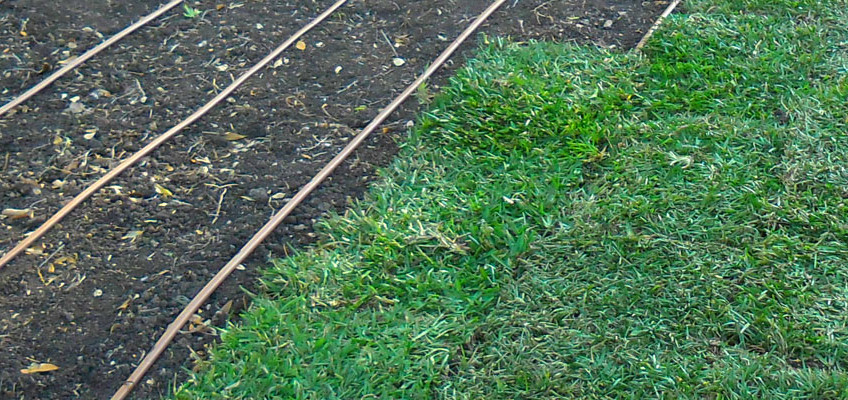
Targeted foundation irrigation is one practical method for controlling soil moisture. A drip system provides controlled watering to specific areas of the landscape, rather than watering the entire yard.
Why Moisture is Essential For Foundation Soil
A change in moisture content will result in a natural change in soil. Clay soil shrinks when it dries out, and swells when it gets wet.
Not all changes will result in foundation problems. But when there are large and frequent changes in moisture, they can cause soil movement near a house.
This is why it’s important for homeowners in dry Texas climates to monitor the soil around their foundations.
Maintaining a fairly uniform soil for long dry periods may be part of a larger property maintenance program.
How the System Delivers Water
A foundation drip irrigation system consists of tubing with small emitters. These are designed to slowly and steadily release water into the surrounding soil.
The system doesn’t require spraying water on a big lawn like traditional sprinklers. Water is directed to specific areas where moisture management is desired.
The tubing can be linked to a controller to control when the system is in action. This means homeowners or irrigation professionals can fine-tune watering based on seasonal conditions.
The quantity and frequency of watering should be determined by the characteristics of the soil, precipitation, temperature, drainage, and the particular arrangement of the property.
Why Homes in North Texas Need a Foundation Watering System
A foundation watering system in Texas can be beneficial during periods of below-normal rainfall.
This may be especially important in the summer months in the North Texas area. When the ground around your house gets very dry, cracks start to show, and the soil starts to separate from adjacent hard surfaces, it might be a good idea to have the irrigation system checked.
Homes nestled in expansive clay soils can also enjoy better moisture management.
But foundation irrigation is not the answer to structural damage. When there are large cracks, uneven floors, sticking doors, or other strange changes in the home, get it checked out.
Establishing an Appropriate Watering Schedule
A single watering schedule cannot be suitable for all properties.
The foundation watering schedule in North Texas should be adjusted to the weather and soil conditions. The system may be required to work more often during hot, dry periods. Watering may need to be decreased or temporarily discontinued after heavy rains.
The goal is not to waterlog the soil.
Too much watering can cause problems, such as excess moisture in the soil and drainage problems. A well-adjusted system will deliver controlled moisture, not too much or too little.
Rain sensors and smart irrigation controllers can also make seasonal changes a breeze.
Where the Drip Line Should Be Placed
Location is as important as scheduling.
A drip line around house foundation areas should be carefully placed to allow water to reach the soil around the house but not directly against the foundation.
This will depend on the design, soil, grading, drainage, landscape, and existing irrigation system in the home.
Tubing placed near the structure or uneven emitter spacing may lead to uneven moisture distribution.
A professional appraisal can be used to establish a location and coverage for the property.
Also Read: Why Does My Sprinkler System Have Low Water Pressure?
Why a Dedicated Zone Can Help
Foundation watering requirements are not the same as lawn irrigation.
Your lawn may require broad spray coverage, but foundation area irrigation demands slower and more precise watering. These functions can be separated so each zone can function as per its requirements.
A well-designed foundation drip zone system can also facilitate seasonal changes.
For instance, the gardener who is watering the foundation might decrease the amount of water in the foundation after a good rain but not change the watering schedule for the flower beds or the lawn.
Professional Installation and Maintenance
A professional irrigation technician can also inspect your existing system prior to recommending changes. They are able to inspect water pressure, current zones, tubing location, drainage, and coverage.
The system should also be routinely inspected.
Emitters can become clogged, lines can be damaged, or lines can be misaligned, which will result in water not being delivered to the correct areas. Underground irrigation components can also be damaged by landscaping projects.
Regular inspections will help identify these issues before they impact the system’s performance.
Key Takeaways
- Foundation irrigation systems control soil moisture.
- Supplemental watering may be beneficial in Texas during hot and dry conditions.
- Expansive clay soils may move quite a bit due to moisture.
- Drip irrigation ensures controlled water delivery to specific areas.
- Watering schedules should be adjusted according to local climate.
- Correct drip-line placement is vital to uniform moisture application.
- A separate irrigation zone provides better control.
- Irrigation to the foundation will not repair existing structural damage.
Summary
Foundation irrigation not only provides additional water but keeps the soil moisture balanced. A well-designed drip system can help homeowners control moisture around their property during dry North Texas weather.
The type of system you need is dependent on the layout of your home, soil, drainage, irrigation system, and weather conditions. When installed by professionals, the system can help to ensure that water is being delivered where it is needed and not being wasted.
Hire Us to Maintain Your Irrigation System
Trust Double Eagle Sprinkler to check your irrigation system and learn if you need a foundation irrigation watering system. Whether you need a professional foundation drip zone installation or maintenance, our experts can help. Call us today to discuss your requirements.